
Trinamool Congress leader Abhishek Banerjee has accused the BJP government of conspiring against Indian citizens by deleting names from electoral rolls and diverting attention from core issues.
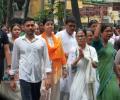
West Bengal Chief Minister Mamata Banerjee is set to hold a dharna in Kolkata against alleged arbitrary deletions in the state's electoral rolls, marking a return to her roots as a street fighter and signalling a key political battle ahead of Assembly elections.

Assam has published its draft electoral roll with 2.52 crore electors, an increase of 2.19 lakh voters since the last revision. The list includes detailed breakdowns by gender, age, and disability, with a period for claims and objections until December 11, and the final list due on January 4 next year. This revision is part of a unique Special Revision process for the state.
Trinamool Congress leader Abhishek Banerjee has accused the BJP government of conspiring against Indian citizens by deleting names from electoral rolls and diverting attention from core issues.

The draft electoral roll for Uttar Pradesh, published on Tuesday, includes 13.58 crore voters, marking an increase of over 18 lakh voters since April. The revision, with January 1, 2027, as the qualifying date, aims to include new eligible citizens and remove duplicate or deceased entries. Citizens can submit claims and objections until December 16, with the final roll to be published on January 4, 2027. Special camps and online facilities are available for verification and updates.
Following a Supreme Court directive, details of names deleted from Bihar's draft electoral rolls have been published online. The Election Commission defends the special intensive revision process.

The Supreme Court will hear a batch of pleas on December 9, including one by Congress leader Rahul Gandhi and other INDIA bloc leaders, alleging widespread voter deletions and irregularities in the special intensive revision (SIR) of electoral rolls. The petitioners seek to question the Election Commission on its decision-making process, particularly regarding whether SIR decisions were collective or unilateral, and modifications to online registration systems. The EC has defended its actions, stating that decisions were unanimous and no changes were made to statutory forms.
The Election Commission has informed the Supreme Court that over 37 lakh appeals concerning deletions or inclusions in West Bengal's electoral rolls remain pending under the Special Intensive Revision. The apex court-appointed tribunals have disposed of only a fraction of the 38.20 lakh appeals filed, prompting the Supreme Court to seek data and a plan for streamlining the adjudication process.

The Bombay High Court in Goa ruled that provisions of the Representation of the People Act and Registration of Electors Rules remain in force during a Special Intensive Revision of electoral rolls. The court directed authorities to include six members of a Goa family in the voter list, criticising the Election Commission's system for rejecting Form 8 applications for residence change, stating it denied citizens their right to vote and amounted to suspending legal provisions.
The Supreme Court has directed the Election Commission to provide details on the disposal of appeals by tribunals concerning deletions from West Bengal's electoral rolls during the Special Intensive Revision (SIR). The court emphasised the need to track the progress of these appeals, which were set up to address irregularities. It also clarified that grievances regarding the denial of PDS benefits due to voter deletion should be taken up with the Calcutta High Court.

The Election Commission has provided a fresh opportunity for voters in seven states marked as Absent, Shifted, Dead, or Duplicate (ASDD) to be included in the final electoral rolls. This decision comes amidst allegations of disenfranchisement and aims to facilitate the inclusion of electors whose enumeration forms were not returned during the Special Intensive Revision exercise.

The Election Commission has released the final electoral roll for Tamil Nadu, revealing a significant decrease in the number of voters due to deletions and new additions.

Senior Trinamool Congress leader Kalyan Banerjee has commented on the Supreme Court judgment regarding the Special Intensive Revision (SIR) of electoral rolls, emphasising its specific application to the Bihar case and highlighting the Election Commission's limited authority in determining citizenship.
The Supreme Court of India resumed hearing petitions challenging the Special Intensive Revision of electoral rolls in Bihar, addressing the use of Aadhaar and concerns about voter deletions.

The Supreme Court on Thursday expressed its primary concern for ensuring access for electors whose names were omitted from Delhi's draft voter list during the Special Intensive Revision (SIR) of electoral rolls. The court noted the Election Commission's provision for downloading enumeration forms and will review the matter on December 2, while also seeking details on applications for various voter forms.

FIRs have been registered against BJP leader Ravi Patil and others in Karnataka for allegedly attempting to delete the names of minority community voters from electoral rolls using fraudulent Form-7 applications. Similar cases of alleged voter deletion have also emerged in Bidar and Mysuru, leading to political protests by the Chief Minister.

The Supreme Court has directed the Election Commission to investigate allegations of false Form 7 applications being filed for the deletion of electors in the Mustafabad assembly constituency in Delhi. The plea highlighted reports of fraudulent applications, some filed in the names of booth level agents who denied knowledge, and others claiming living individuals were dead or had moved. The EC is tasked with verifying these claims and taking remedial action.

The Election Commission of India clarified to the Bombay High Court that the absence of a voter's name from a draft Special Intensive Revision (SIR) roll does not equate to deletion, as SIR is a fresh preparation of the electoral roll. This clarification came during a hearing on a writ petition filed by a Goa resident whose family's names were missing from the SIR roll. The court has reserved its verdict.

The Election Commission of India has told the Delhi high court that two voters, whose names were deleted from the electoral rolls after they could not complete the enumeration process during the Special Intensive Revision in the national capital, can fill Form 6 for redressal of their grievance.
Opposition parties are questioning the Election Commission's intentions behind the second phase of special intensive revision of electoral rolls in 12 states and Union Territories. The BJP has slammed the Congress and called the opposition a 'herd of dissatisfied souls'.
The Supreme Court has directed the Election Commission to address typographical errors and other mistakes in the final Bihar electoral roll. The court will hear further arguments on November 4.
The Election Commission is set to publish the draft electoral rolls for West Bengal on Tuesday following the completion of the statewide Special Intensive Revision (SIR) ahead of the 2026 assembly polls. The publication of the draft rolls will mark the end of the enumeration phase and the beginning of a far more contentious stage - claims, objections and hearings that will stretch into February 2026.

Major opposition leaders, including Rahul Gandhi and Mallikarjun Kharge, have filed a petition in the Supreme Court challenging alleged large-scale voter deletions and irregularities in the Special Intensive Revision (SIR) of electoral rolls. This action follows a "March for Democracy" and a declined request to meet the Chief Justice of India regarding "vote chori" allegations.

The DMK has launched a strong attack on Congress leader Rahul Gandhi, questioning his silence on alleged voter deletions in Tamil Nadu and accusing him of inconsistency regarding electoral roll revisions. This comes amidst a broader campaign by the INDIA bloc against the Election Commission over the Special Intensive Revision (SIR) process.
The Election Commission (EC) has published the draft electoral rolls for Bihar, marking a key step ahead of the upcoming assembly elections. The publication follows a month-long Special Intensive Revision (SIR) exercise.
The Election Commission of India (ECI) asserts that major political parties participated in the Special Intensive Revision (SIR) of electoral rolls, deploying booth level agents despite opposing the exercise in the Supreme Court. The ECI defends its authority to conduct the revision to maintain the integrity of elections.
The Supreme Court has directed the Election Commission to devise a mechanism to reach out to approximately 47 lakh Delhi voters whose names were struck out from the draft electoral rolls during the ongoing Special Summary Revision (SIR). The court emphasised that the right to vote is vital and cannot be forfeited due to absence, questioning the EC's requirement for previously enrolled voters to file Form 6 for re-inclusion and suggesting alternative methods like publishing lists and accepting late enumeration forms.

The Bombay High Court's Goa bench has ruled that draft electoral rolls cannot be the sole basis for deleting names from voter lists, asserting that administrative software cannot supersede statutory laws. The court questioned the Election Commission of India's authority to delete voters without a hearing, highlighting concerns over the ERONET system's limitations and its potential to disenfranchise citizens.
A report by 'Voter Adhikar Manch' has revealed that the number of excluded electors in Delhi's draft electoral roll under the Special Intensive Revision (SIR) exceeded the winning margin in 68 of 70 Assembly constituencies in the 2025 polls. The audit found over 47 lakh electors marked as absent, shifted, dead, or duplicate, raising serious questions about the integrity of the electoral process and the accuracy of voter lists.
Bengaluru's electorate has significantly decreased by 43.13% to 59.08 lakh after the Special Intensive Revision (SIR) process and the publication of the final electoral roll on October 27. This reduction is largely due to deletions under the ASDDO category (Absent, Shifted, Dead, Duplicate, Others), with Bengaluru South and Mahadevapura seeing the highest number of removals. Despite the deletions, the Chief Electoral Officer assured that no eligible voter was removed and the process was transparent.

The Supreme Court has sought a response from the Election Commission on a plea by Trinamool Congress MPs alleging irregularities in the revision of electoral rolls in West Bengal.

An independent commission of retired judges has formally requested Uttar Pradesh Chief Minister Yogi Adityanath to furnish supporting data for his statement alleging the exclusion of 1.27 crore Hindus from the state's voters' list, amidst concerns over impending elections.
Tamil Nadu's ruling DMK has filed a petition in the Supreme Court challenging the Election Commission's plan to implement the Special Intensive Revision of electoral rolls in the state.

A panel of retired Supreme Court and High Court judges, part of an Independent Commission on Special Intensive Revision (SIR), held a public hearing on Thursday to address widespread deletions from India's electoral rolls. Testimonies from affected citizens, including a former MP and a Delhi resident declared deceased by the Election Commission, highlighted significant issues. The SIR process, initiated in 2025, has led to the removal of approximately 13 crore voters nationwide, with substantial deletions reported in Delhi and Uttar Pradesh.

A 75-year-old man, Gopalakrishna Subbaiya Pillai, died of a heart attack during a protest organised by the Cockroach Janta Party (CJP) at Shivaji Park in Mumbai. The protest sought the removal of Chief Election Commissioner Gyanesh Kumar over alleged irregularities in electoral rolls. Pillai complained of chest pain and was rushed to a hospital but succumbed during treatment.

Goa Forward Party chief Vijai Sardesai has alleged that Nepalese nationals were added to the state's electoral rolls during the Special Intensive Revision (SIR) and that voters were illegally shifted between constituencies. He has demanded an impartial investigation into these alleged irregularities, calling for deletion of illegal entries and action against those responsible.

"There is bound to be revision," the top court said, "otherwise, how will the poll panel delete the names of those who are dead, migrated or shifted to other constituencies?"
Special Intensive Revision of electoral rolls in Bihar reveals millions of voters missing or deceased, prompting Election Commission action.

Karnataka's final electoral roll, published on Tuesday, shows a significant reduction of nearly one crore voters following the Special Intensive Revision (SIR) process, bringing the total count to 4.55 crore from 5.54 crore.
The Supreme Court is scheduled to hear a batch of pleas challenging the Election Commission's decision to conduct a Special Intensive Revision (SIR) of electoral rolls in Bihar. Political parties and other petitioners have raised concerns about the revision process.
